
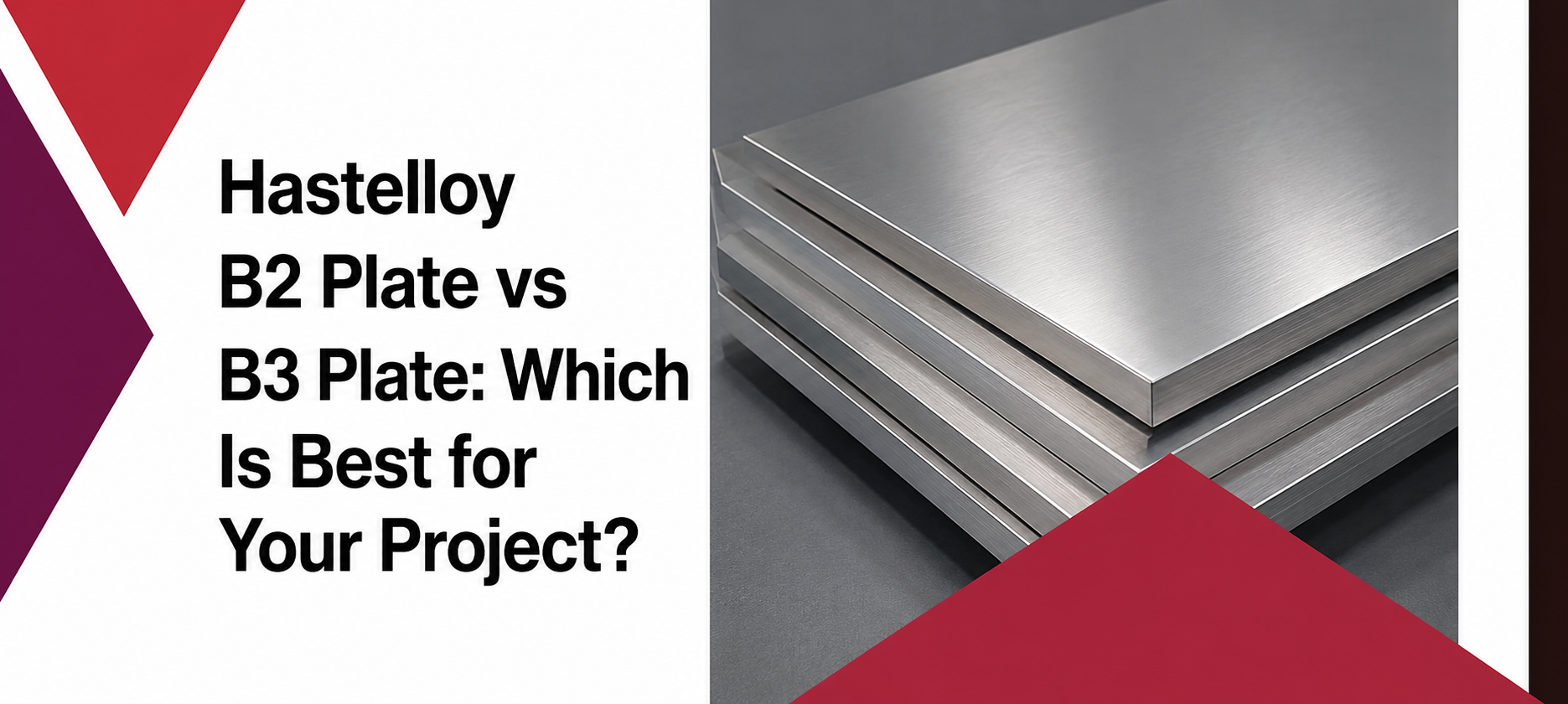
Choosing the right material for industrial projects is an important decision. It is common for engineers and buyers to struggle when deciding between different nickel alloys because technical data sheets often look very similar. The Hastelloy family consists of nickel-molybdenum alloys made for extremely corrosive environments. Comparing Hastelloy B2 and B3 is necessary because, while they look the same, they behave differently when you heat them up or weld them.
Introduction to Hastelloy Alloys
Hastelloy alloys are a preferred choice for chemical processing plants. They are mostly used where stainless steel cannot survive, specifically in high-acid areas. These alloys contain a high amount of molybdenum, which helps them resist corrosion in reducing environments. Understanding the difference between B2 and B3 matters because it affects how long your equipment lasts and how much maintenance it needs.
What is Hastelloy B2 Plate?
Hastelloy B2 Plate is a nickel-molybdenum alloy with a high molybdenum content, usually around 28%. This specific chemistry makes it very resistant to hydrochloric acid at basically any concentration or temperature. It also handles sulphuric and phosphoric acids quite well in most industrial settings.
However, it has a few drawbacks. It does not work in oxidizing environments. If there are ferric or cupric salts in your chemicals, the material will likely fail. It also becomes brittle if it stays in the 538°C to 816°C range for too long during fabrication. If you need a Hastelloy B2 Plate supplier, Preston Alloys stocks these for various industrial application of Hastelloy B2 Plate uses, like producing ethylene glycol or certain pesticides.
What is Hastelloy B3 Plate?
Hastelloy B3 Plate is an upgraded version of the B2 alloy. The chemistry was changed slightly to improve thermal stability. This means the alloy doesn’t turn brittle as fast as B2 when it gets hot. It offers the same protection against hydrochloric acid but is much more forgiving during the manufacturing process.
It has better resistance to stress corrosion cracking, which is a common way these plates fail in the field. Because of these upgrades, it is usually the preferred choice for new builds. When you look at Hastelloy B3 Plate mechanical properties, you will see it stays tough even after being exposed to the heat of a welding torch. As a Hastelloy B3 Plate supplier, we see more people moving to B3 for its reliability.
Key Differences Between Hastelloy B2 Plate and B3 Plate
While both alloys serve the same general purpose, their technical differences change how you use them in a factory. The table below shows the practical differences you need to know.
| Feature | Hastelloy B2 Plate | Hastelloy B3 Plate |
| Main Composition | ~28% Molybdenum, Nickel balance | ~28.5% Molybdenum, Nickel balance + additives |
| Thermal Stability | Lower; can become brittle quickly | Higher; resists phase transformation |
| Fabrication | Needs very careful heat control | Much easier to weld and form |
| Corrosion Resistance | Excellent in reducing acids | Same as B2, but better in stressed areas |
| Weldability | Moderate; risk of cracking in heat zones | Excellent |
| Availability | Mostly for repairing old systems | Standard for most new projects |
The main thing to remember is how they react to heat. B2 can form a brittle intermetallic phase quite fast when it is heated up during welding. B3 was specifically designed to stop this from happening so quickly. This gives the person doing the welding more time to finish the job without ruining the metal.
Corrosion Resistance Comparison in Real-World Applications
Both plates do a great job in hydrochloric acid. They are also stable in pure sulphuric acid and various organic acids like acetic acid. In most reducing environments, the corrosion rates are almost identical. However, B3 is better in extreme conditions because the metal stays structurally sound for longer. Neither of these plates should ever be used with nitric acid or other oxidizing chemicals.
Advantages of Hastelloy B2 Plate
- Strong resistance in reducing conditions: It is very reliable in pure acids where no oxygen or oxidizing salts are present.
- Cost-effectiveness for specific applications: B2 can sometimes be a bit affordable if you are doing a very simple replacement job.
- Proven performance in legacy systems: Many old chemical plants were built using B2 specs and they continue to use it for like-for-like repairs.
Advantages of Hastelloy B3 Plate
- Better thermal stability: This is the main reason to buy it. It does not get brittle during welding or if the plant temperature spikes.
- Reduced susceptibility to stress corrosion cracking: It holds up better when the equipment is under physical pressure in a corrosive zone.
- Longer service life in aggressive environments: Because the metal is more stable, it generally lasts longer than B2 in a working plant.
Industrial Applications of Hastelloy Plates
Industrial applications of Hastelloy plates include:
- Chemical Processing: Used in vessels, reactors, and other equipment handling hydrochloric acid and other aggressive chemicals.
- Petrochemical: Applied in catalyst recovery units, piping systems, and other components exposed to high heat and corrosive process conditions.
- Pharmaceutical: Used in storage tanks, reactors, and processing equipment that handle acidic ingredients and a variety of chemicals.
- Pollution Control: Commonly used in gas scrubbers and in components that require forming, bending, and corrosion resistance.
How to Choose Between Hastelloy B2 and B3 Plate
- Based on chemical exposure: If you are dealing with pure reducing acids, B2 is usually enough for the job.
- Based on temperature conditions: If your process gets hot and then cools down often, B3 is a much safer choice.
- Based on fabrication requirements: If you have to do a lot of welding or complex shaping, B3 is less likely to crack.
- Budget vs performance considerations: B2 might be more affordable today, but B3 saves money later because it doesn’t fail as often.
Common Mistakes to Avoid When Selecting Hastelloy Plates
The most frequent mistake is using these plates in oxidizing environments. Even a small amount of oxygen or ferric ions will make the plate corrode very fast. Another mistake is picking B2 just to save a little money on the material cost. If the welding goes wrong because B2 is harder to work with, the repair costs will be much higher than the initial savings.
Conclusion
Both Hastelloy B2 and B3 are high-quality materials for tough chemical jobs. B2 is a classic choice that works well if you are careful with heat. However, B3 is generally the better option for most modern projects because it is more stable and easier to build with. At Preston Alloys, we suggest looking at how much welding your project needs before you pick one. If you need more specific advice or want to check our current stock in Mumbai, you can talk to our team of experts anytime.


Whatsapp
+91 9773411691